
 GET THE APP
Bali Fuel Queues Stretch For Days
Long lines formed at Bali gas stations after a tanker problem, rough seas and road congestion slowed deliveries. Officials said storage depots still held fuel and 24-hour distribution was underway.
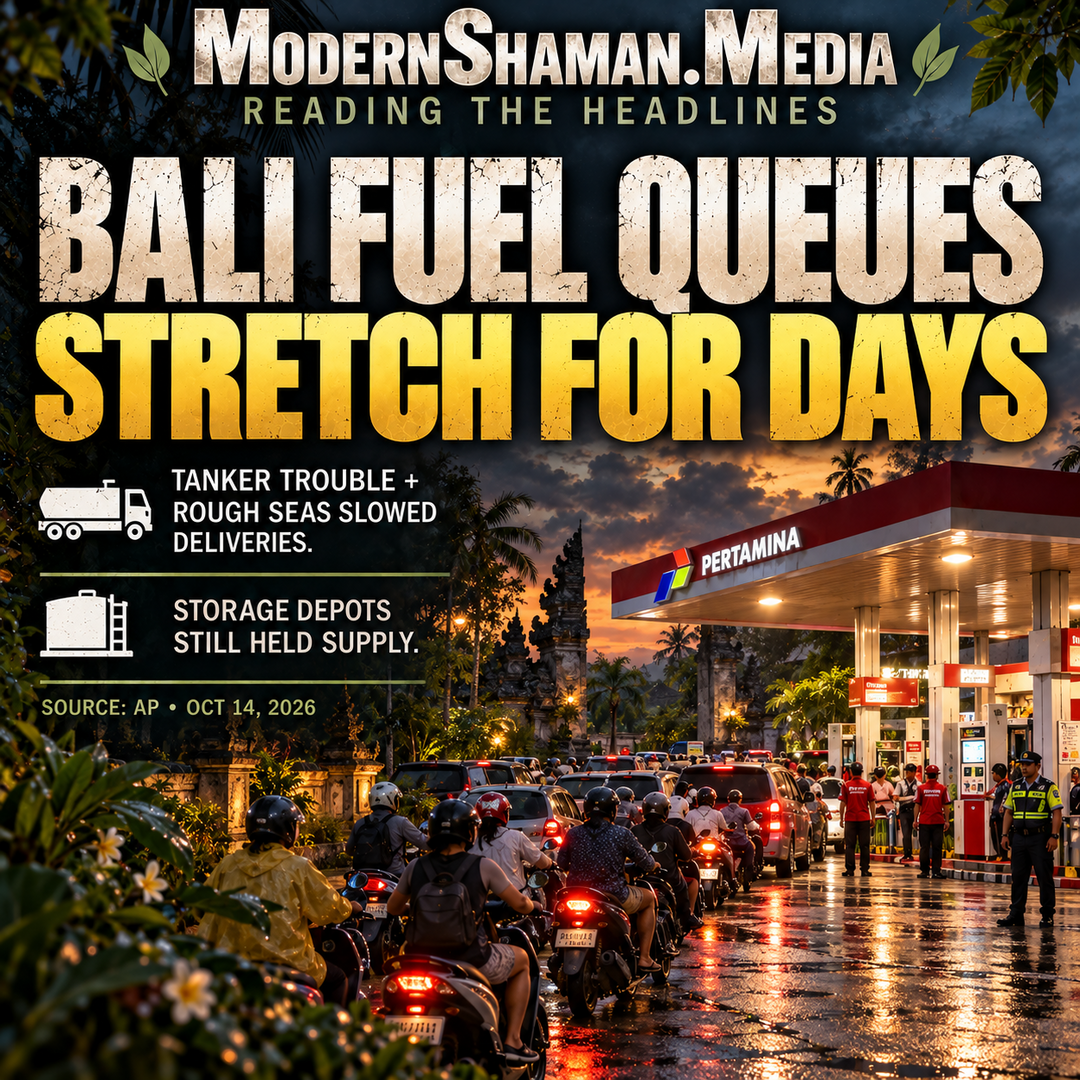
Long lines of motorcycles and cars stretched outside fuel stations across Bali this week as motorists waited for gasoline. The source video shows the practical effect: people losing hours in queues, closed pumps at some locations and traffic backing onto nearby roads. The scene is serious, but officials say it is a distribution breakdown rather than proof that the island's storage depots are empty.
The Associated Press reported on October 14 that a fuel tanker developed an anchor problem while preparing to unload, delaying deliveries to Bali's main terminals. Rough seas and bad weather slowed other shipments, while heavy demand for subsidized Pertalite gasoline and panic buying put additional pressure on individual stations.
State energy company Pertamina said a tanker carrying 18 million liters of Pertalite and 2.5 million liters of Pertamax had arrived, and officials said deliveries were running around the clock. Bali Governor I Wayan Koster said depot stocks remained sufficient but fuel was moving too slowly from terminals to filling stations. That distinction matters: the immediate bottleneck is getting available fuel through the last part of the network, not a verified islandwide depletion of reserves.
The disruption has already changed ordinary routines. Bali's provincial government announced work-from-home arrangements for October 15 through 17 to reduce traffic and give Pertamina more room to distribute fuel. On an island where motorcycles and cars carry workers, tourists, food and supplies, a delayed tanker can quickly become a productivity and mobility problem even when more fuel is technically available upstream.
For residents and travelers, the practical response is to follow official station and traffic updates, avoid joining a queue only to top off a nearly full tank, and allow extra travel time while deliveries normalize. The broader lesson is about distribution resilience: storage numbers alone do not keep daily life moving when weather, equipment and road congestion interrupt the route from terminal to pump.