
 GET THE APP
England's Drought Is Far From Over
England entered October with most reservoirs notably or exceptionally low. A wildlife-rescue clip shows why the same drought pressure matters beyond household taps.
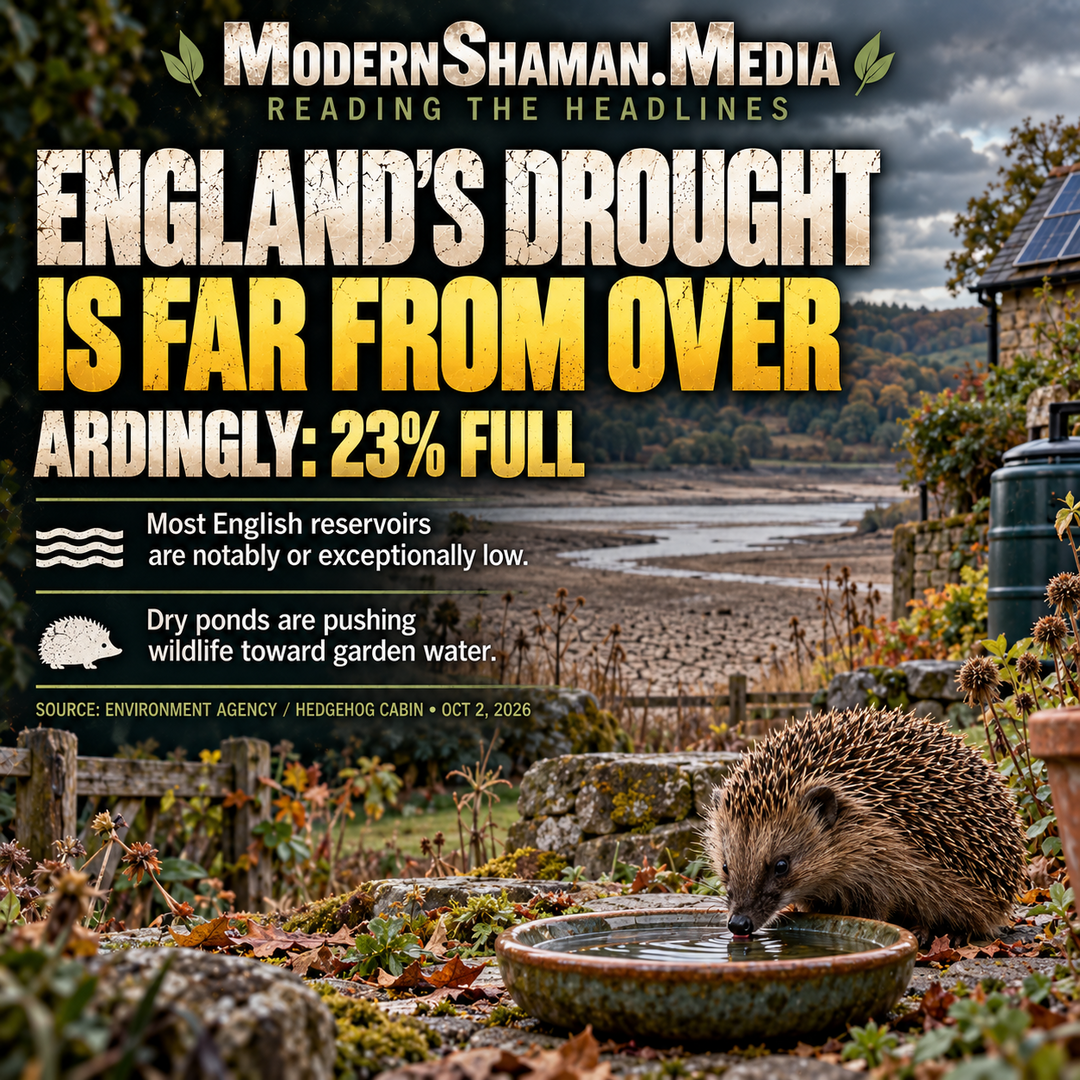
A new source video from Hedgehog Cabin shows wild animals relying on water put out by people during the long dry spell. It is one rescue group's local view, not a nationwide wildlife count, but it captures a practical consequence of drought: when ponds, puddles and streams shrink, garden water can become part of the remaining network animals use.
The national water picture is independently documented. In an October 2 release, the Environment Agency said September became the sixth month of 2026 with below-average rainfall. Most English reservoirs were classed as notably or exceptionally low, with Ardingly Reservoir at 23% capacity on September 28 and Wimbleball at 21%. At this time of year, overall storage would normally be close to three-quarters full.
The pressure is not identical everywhere. September rainfall averaged 65% of normal across England, but the east received 52% and the south east 57%. The Environment Agency said soils remained very dry and repeated that England would need about 120% of average rainfall over the next seven months for the whole country to be out of drought by spring.
That does not mean household taps have failed across England. The government said water companies were using drought plans, permits and demand measures to protect public supplies, while South East Water was preparing to seek a non-essential-use ban. The accurate message is continuing strain and regional risk, not a universal shutoff.
Ara's wildlife angle has a grounded household action behind it. The RSPCA recommends fresh water in a shallow dish for hedgehogs and says bowls should be cleaned and refilled daily to reduce disease risk. The Wildlife Trusts likewise advises shallow water with gradual, rough edges so small animals can climb out. Follow local restrictions, use water carefully, and make any wildlife station safe rather than deep.