
 GET THE APP
Farmers Are Squeezed At Both Ends
Growers face expensive fuel, fertilizer, seed and equipment before harvest while having limited control over the prices they receive. USDA's latest forecast shows the pressure in real terms.
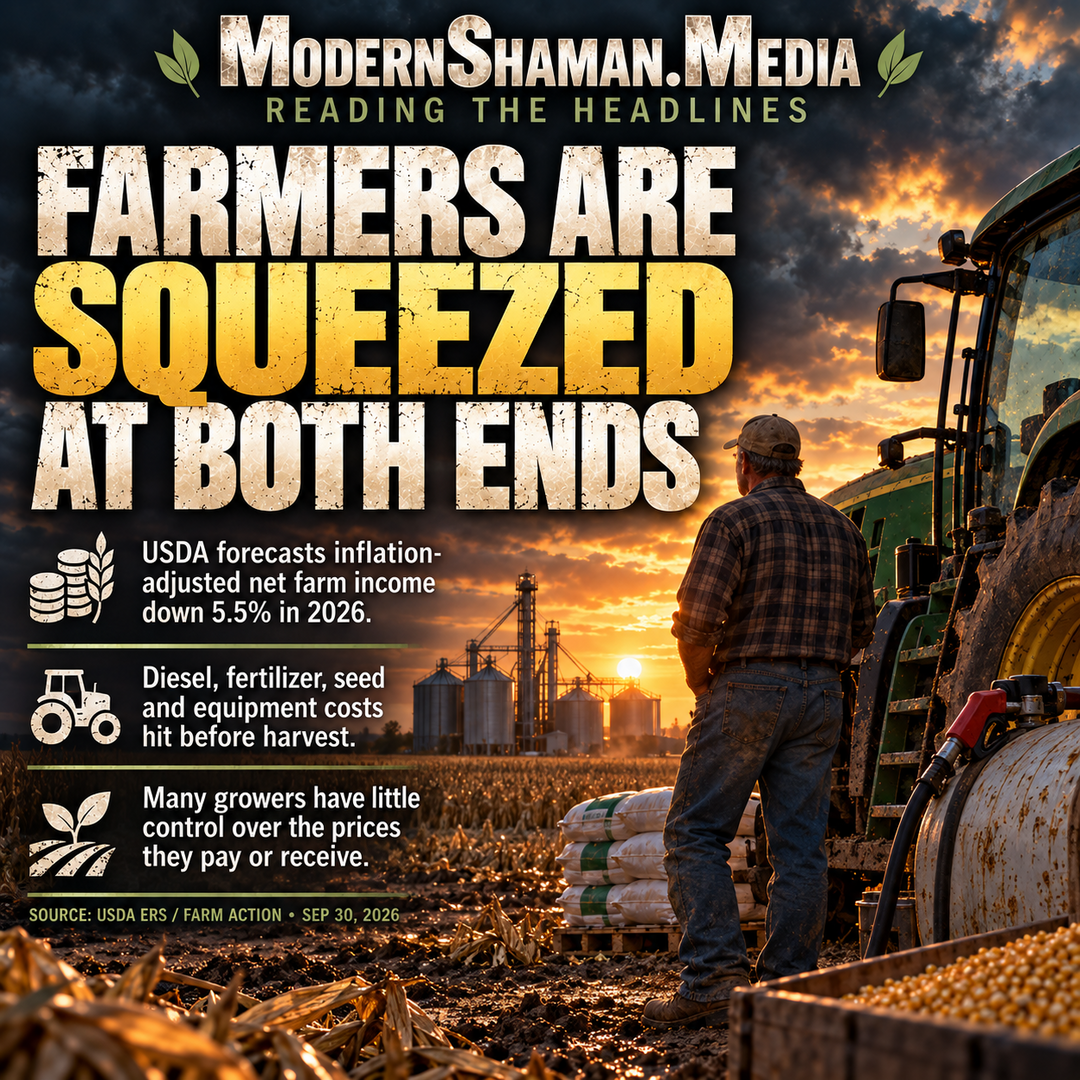
A new Farm Action source clip puts a familiar farm-economy problem in plain language: many farmers are price takers on both sides of the ledger. Fuel, fertilizer, seed, chemicals and equipment are largely purchased at prices set elsewhere, while the price a grower receives after harvest is also shaped by buyers and commodity markets far beyond a single farm's control.
USDA's September 2026 farm-income forecast gives that pressure a measurable backdrop. The agency expects inflation-adjusted net farm income to fall 5.5% in 2026. That does not mean every farm will experience the same result—crop, region, debt, yields and contracts matter—but it indicates a sector losing purchasing power even when nominal dollar totals can look larger.
The squeeze can travel into the food system in several ways. A farm may postpone equipment, cut back on labor, change crops, use less input than agronomically ideal or leave the business. Consumers do not see a one-for-one pass-through from any single cost, but sustained pressure can reduce resilience and contribute to tighter supplies or higher prices farther down the chain.
The practical point is to watch both farm input costs and farmgate returns, not just the price at the supermarket. Supporting local producers can help where direct purchasing is available, but the structural issue is bargaining power: who sets the price before planting, and who sets it again after harvest.