
 GET THE APP
Florida's No Minors on Social Media Law Is Back
The Eleventh Circuit threw out the order blocking Florida's HB 3. Covered platforms cannot give accounts to children under 14; 14- and 15-year-olds need parental consent. The case is still going.
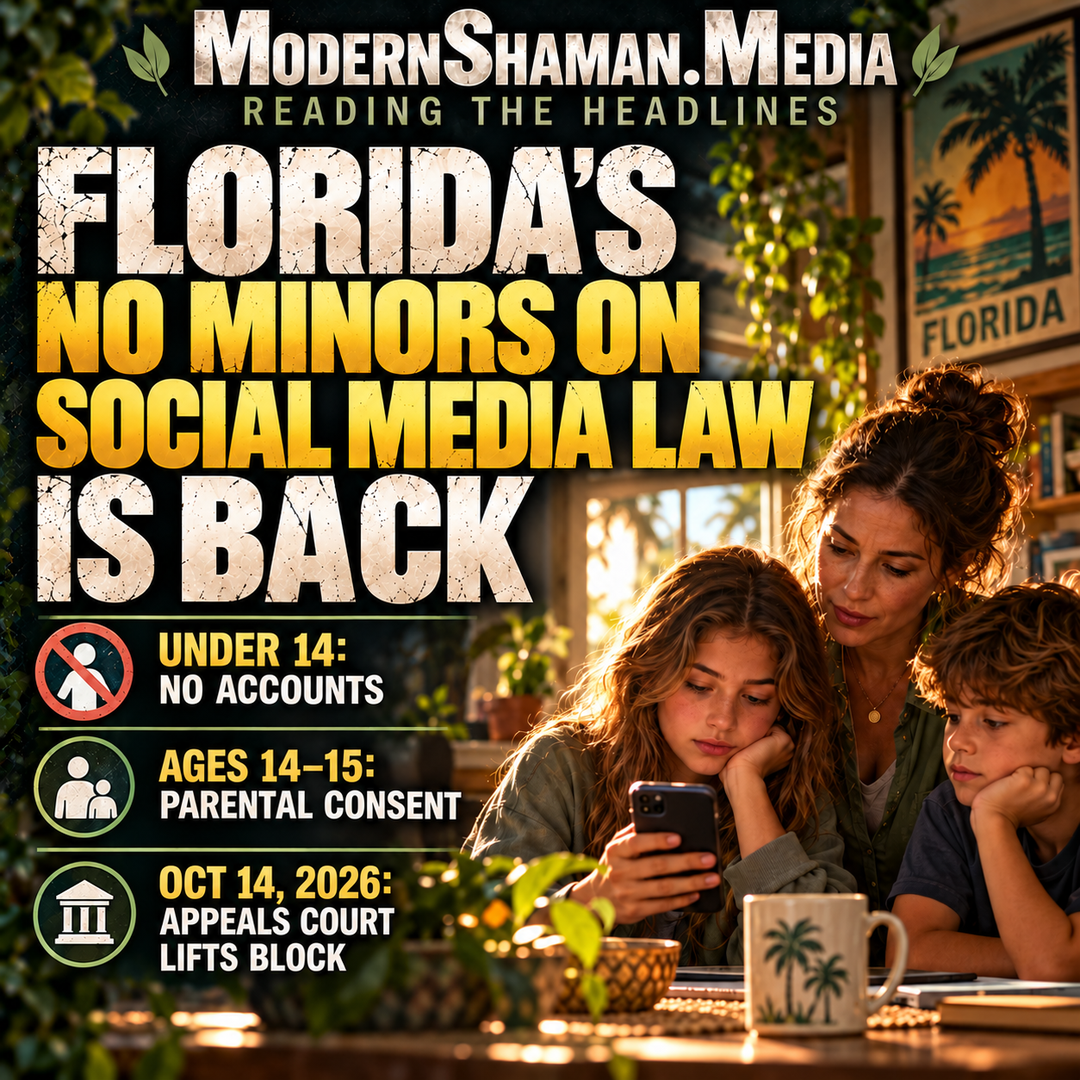
Florida's social media law for children has survived another court fight. On October 14, the U.S. Court of Appeals for the Eleventh Circuit threw out a lower judge's preliminary order blocking HB 3. The state can enforce the law while the lawsuit continues. The appeals court had already paused that block during the appeal, so this was not the first day enforcement became possible. It is a decisive ruling against the temporary injunction, not the end of the case.
Here is the rule in plain language. On social media platforms covered by HB 3, children younger than 14 cannot have accounts. Fourteen- and fifteen-year-olds can have accounts only with a parent or guardian's consent. The law is aimed at particular platforms with algorithmic feeds and features associated with heavy use; it does not cover every website where people can talk.
The state says it is trying to protect children from features designed to keep them scrolling. The technology trade groups challenging HB 3 argue that the restrictions burden free expression and take choices away from families. The appeals court recognized that speech rights are involved, but its three-judge panel found the law likely meets the constitutional test at this early stage because it regulates covered platforms by their features rather than by the ideas people share there.
The distinction matters at home. A parent of a 15-year-old gets a consent decision under this law. A parent of a 13-year-old does not get the option to approve an account on a covered platform. Whether you welcome that line or question it, Florida has put the state into a decision families once made with the platforms themselves.
There is also a limit worth stating clearly: HB 3 is an age and parental-consent rule for minors' accounts. It does not itself order every adult to show an ID before using social media. People can reasonably ask how platforms will determine ages and confirm parental consent, and what data those processes might collect. Those implementation questions should not be turned into a claim that the statute already mandates adult ID checks.
The larger question is who gets to set the terms of young people's digital lives: families, companies whose products are built to hold attention, or the state. Protecting kids from manipulative design and protecting their freedom to speak both deserve more than a slogan. For now, the October 14 ruling leaves Florida's restrictions enforceable and sends the legal fight forward. Families should know what the law actually says, and keep an eye on how platforms put it into practice.