
 GET THE APP
Food Costs Top $10K A Year As Safety Confidence Falls
BLS says the average U.S. consumer unit spent $10,169 on food in 2024. Gallup now finds grocery-food confidence at 65% and confidence in federal food-safety oversight at a record-low 47%.
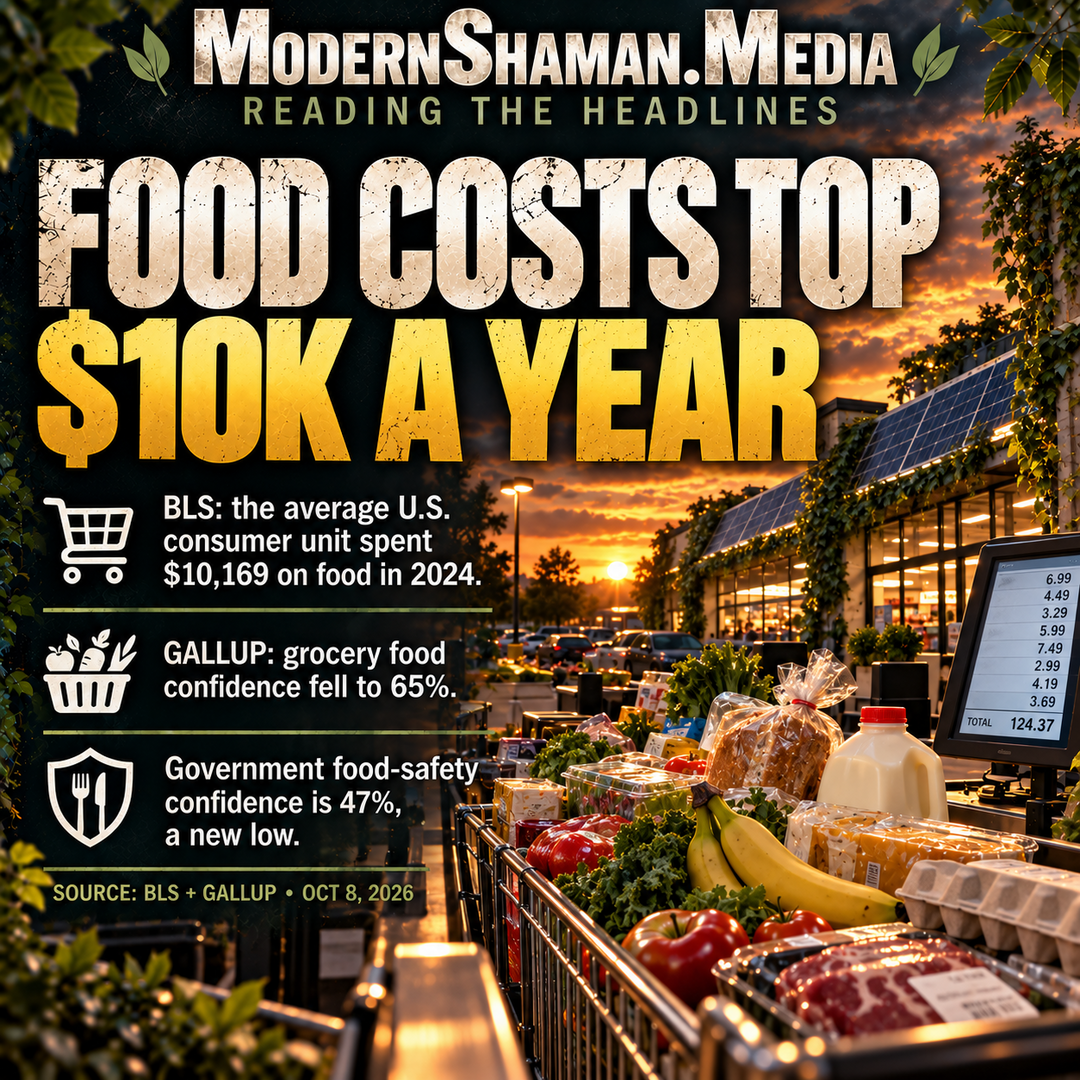
American households are paying heavily for the most basic system in daily life: food. The Bureau of Labor Statistics says the average U.S. consumer unit spent $10,169 on food in 2024, or about $847 a month. That total combines $6,224 spent on food at home with $3,945 spent at restaurants, on delivery and on takeout. It is an average, not a minimum bill and not a grocery-only figure, but it shows how large the food line has become inside a typical household budget.
The price picture in September was mixed rather than uniformly worse. BLS reported that grocery prices edged down 0.1 percent for the month and were 1.8 percent higher than a year earlier, while food away from home rose 3.5 percent over 12 months. A one-month pause does not erase the cumulative increase families already absorbed, and it does not tell every household the same story because location, diet, family size and income change the burden.
Trust is falling alongside the cost pressure. Gallup's October 8 report found that only 65 percent of Americans were confident that food sold in grocery stores is safe to eat, the lowest level in its trend and down from 81 percent in 2019. Confidence in the federal government's ability to ensure food safety fell to 47 percent, also a record low. Seventy-three percent said they had avoided a brand or type of food after a recall or advisory during the past year.
Those numbers document public concern; they do not prove that every product is unsafe or that one hidden group controls the food supply. The harder institutional question is whether a system split among federal agencies, state inspectors, large processors, retailers and private laboratories gives the public enough clear accountability when outbreaks or recalls cross many brands and states. Gallup also found a sharp partisan divide in confidence, but majorities of Republicans, independents and Democrats all reported avoiding some foods after warnings.
For households, the practical response is careful rather than fearful: track the foods your family actually uses, compare unit prices, check official recalls, keep refrigerators at safe temperatures and avoid stockpiling perishables you may throw away. For public institutions and major food companies, the burden is transparency—publish faster trace-back information, explain who inspected what, and show how corrective action reaches the entire supply chain rather than asking families to rely on reassurance alone.