
 GET THE APP
Food Supply Chains Face New Pressure
India's External Affairs Minister S. Jaishankar warns that the Ukraine and Iran–Gulf conflicts are disrupting fertilizer supplies and grain shipments. The signal is serious, but it is a warning about rising exposure—not proof that every market is already short.
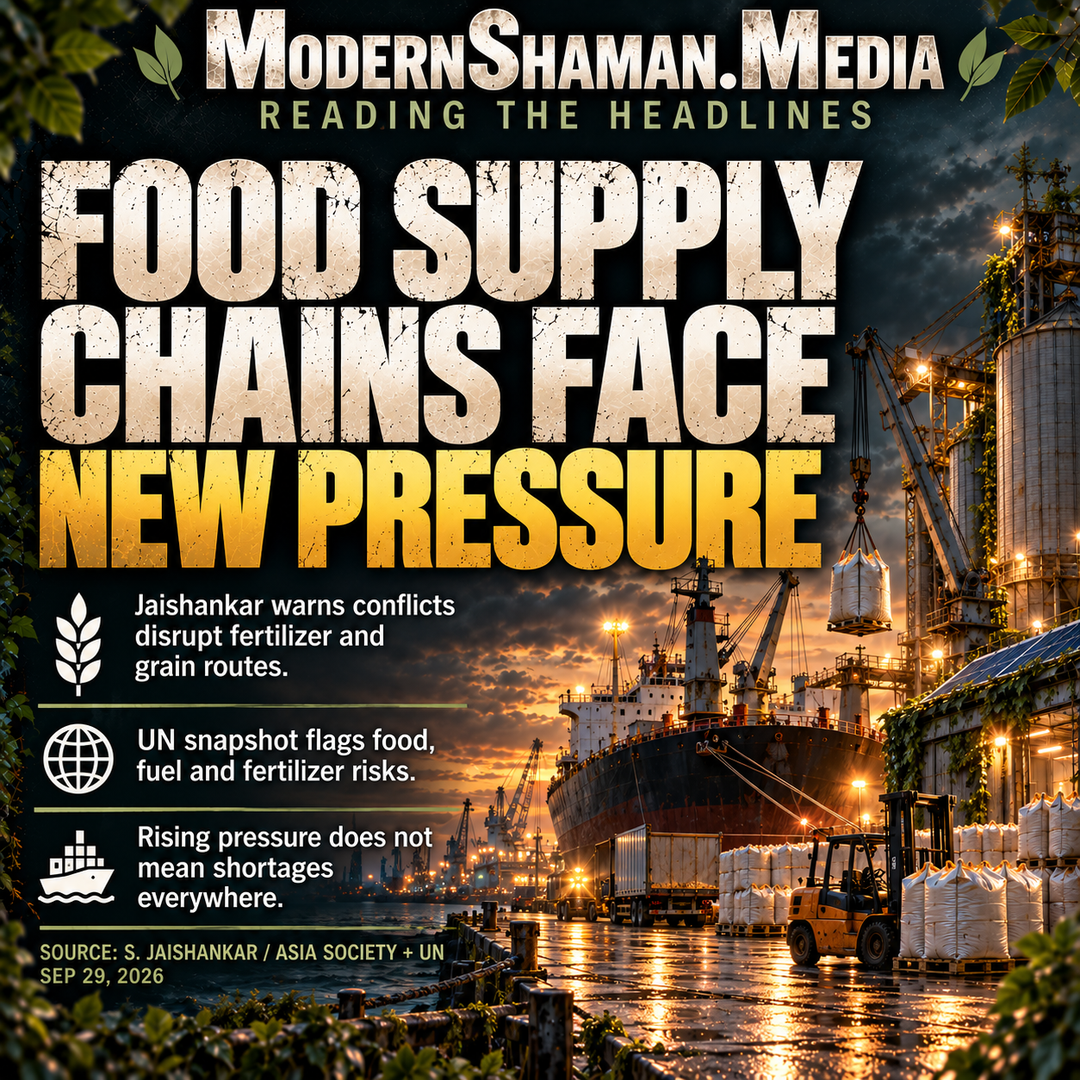
India's External Affairs Minister S. Jaishankar warned during a September 28 Asia Society conversation in New York that conflicts involving Ukraine and the Iran–Gulf region are disrupting fertilizer supplies and grain shipments. A source clip posted on September 29 carries that warning and points to the strain these overlapping shocks place on Global South economies.
The warning has wider support, but it needs careful framing. A recent United Nations snapshot says Middle East pressures are adding uncertainty to fuel, fertilizer and food markets while El Niño raises additional agricultural risk. The same assessment also says widespread impacts have not yet materialized, which is why this is a preparedness story rather than a reason to declare an immediate universal shortage.
Fertilizer and grain problems can travel slowly through the system. Farmers feel higher input costs or late deliveries first; import-dependent countries feel shipping and currency pressure; households may see the effect later in grocery prices or uneven availability. The exact outcome will vary by crop, region, trade route and how quickly suppliers adapt.
For ordinary households, the practical response is calm and boring: keep a rotating buffer of the food you already eat, compare prices before stocking up, learn a few meals built around flexible staples, and watch local availability instead of treating a global warning as proof that your own shelves are about to empty.