
 GET THE APP
Hackers Heat Supermarket Freezers To 50°C
A large-scale cyberattack pushed connected refrigeration systems at hundreds of French supermarkets as high as 50°C, spoiling food and causing fires. Danfoss says affected units were running outdated firmware.
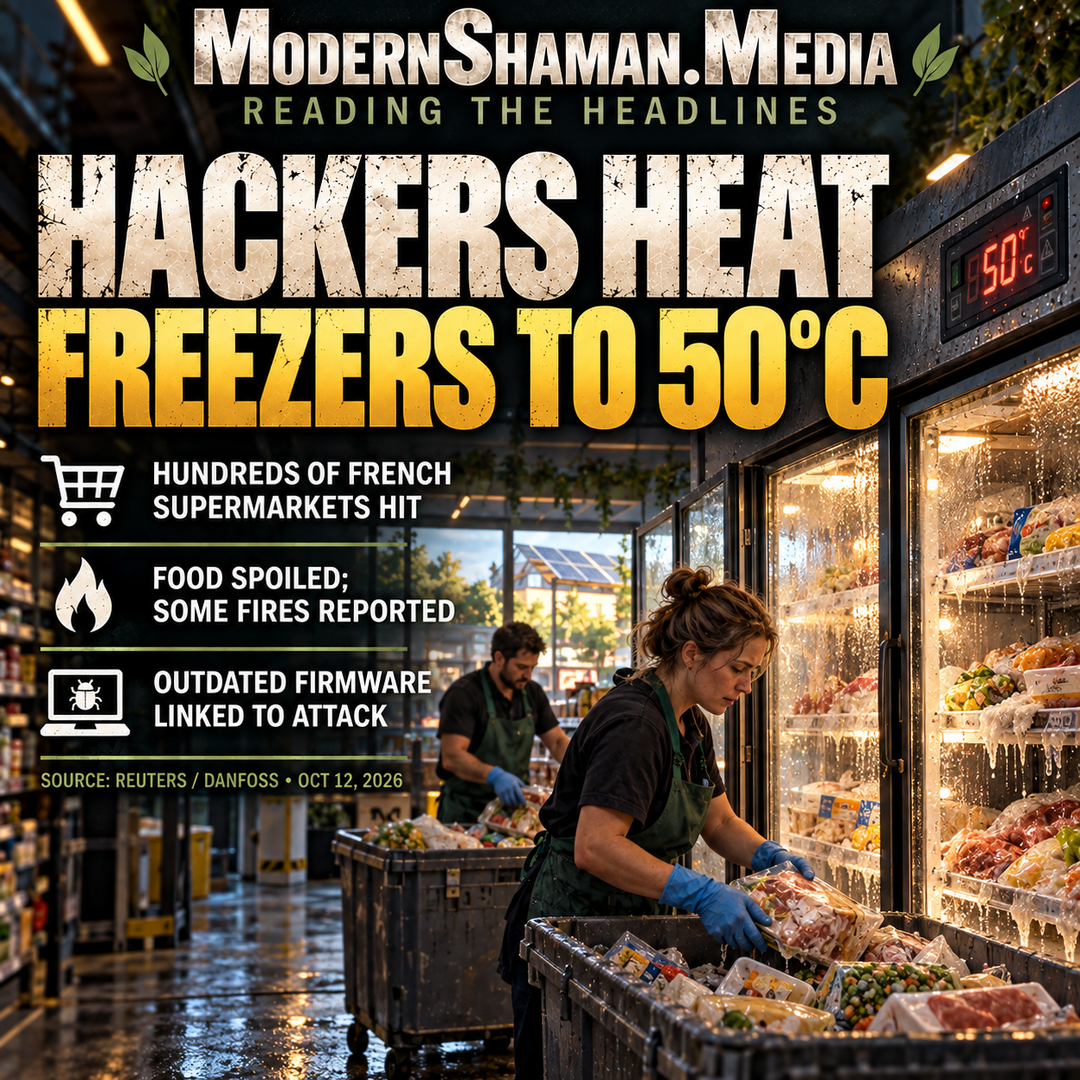
A large-scale cyberattack turned the cold aisle into the point of failure at hundreds of French supermarkets overnight on October 12. Reuters reported that attackers pushed connected refrigerators and freezers to temperatures as high as 50 degrees Celsius, causing food losses and fires. Ara's source reel summarizes the same event and provides a usable visual source post, but the incident totals and technical details below come from direct statements gathered by Reuters and from the published controller research.
The scale was not limited to one chain. Les Mousquetaires said refrigeration at about 150 Intermarché stores was heated to 50°C for six hours and that all affected food was discarded. Carrefour reported 80 stores hit, while Monoprix said 5 percent of its French stores were affected. The Paris prosecutor's office called it a large-scale attack, and France's national cybersecurity agency was asked to investigate. There was no complete industry-wide loss estimate when this article was published.
These systems are attractive targets because one networked management panel can control many refrigerators and freezers across a store. Reuters reported that authorities identified a vulnerability in Danfoss software and that Danfoss said the affected units were running outdated firmware. Separately, Claroty's Team82 published research in August showing authentication-bypass and remote-code-execution paths in the AK-SM 800A platform. Danfoss released updated firmware, but the public record does not yet establish which specific flaw or actor produced every October 12 intrusion.
The household consequence starts with waste and availability rather than the checkout system. A store can keep its tills running and still lose fresh and frozen inventory if temperature control is compromised. That can mean closed aisles, discarded food, delayed restocking and concentrated pressure on nearby stores. It is too early to claim a national shortage or a specific price increase, but the attack shows that software maintenance is now part of food-supply resilience.
For shoppers, the right response is awareness rather than panic buying. Respect temporary aisle closures and do not use food that may have thawed outside safe handling limits. For retailers and cold-storage operators, the published guidance is clearer: update supported controller firmware, migrate unsupported legacy systems, keep management interfaces off the open internet, restrict remote access and segment control networks. The physical cold chain is only as resilient as the digital controls keeping it cold.