
 GET THE APP
Hard Freeze Hits Drought-Damaged Milo
A southwest Kansas farmer says a milo field that recovered from drought faced an overnight hard freeze. The NWS warned of temperatures in the 20s while 39% of Kansas grain sorghum was already rated poor or very poor.
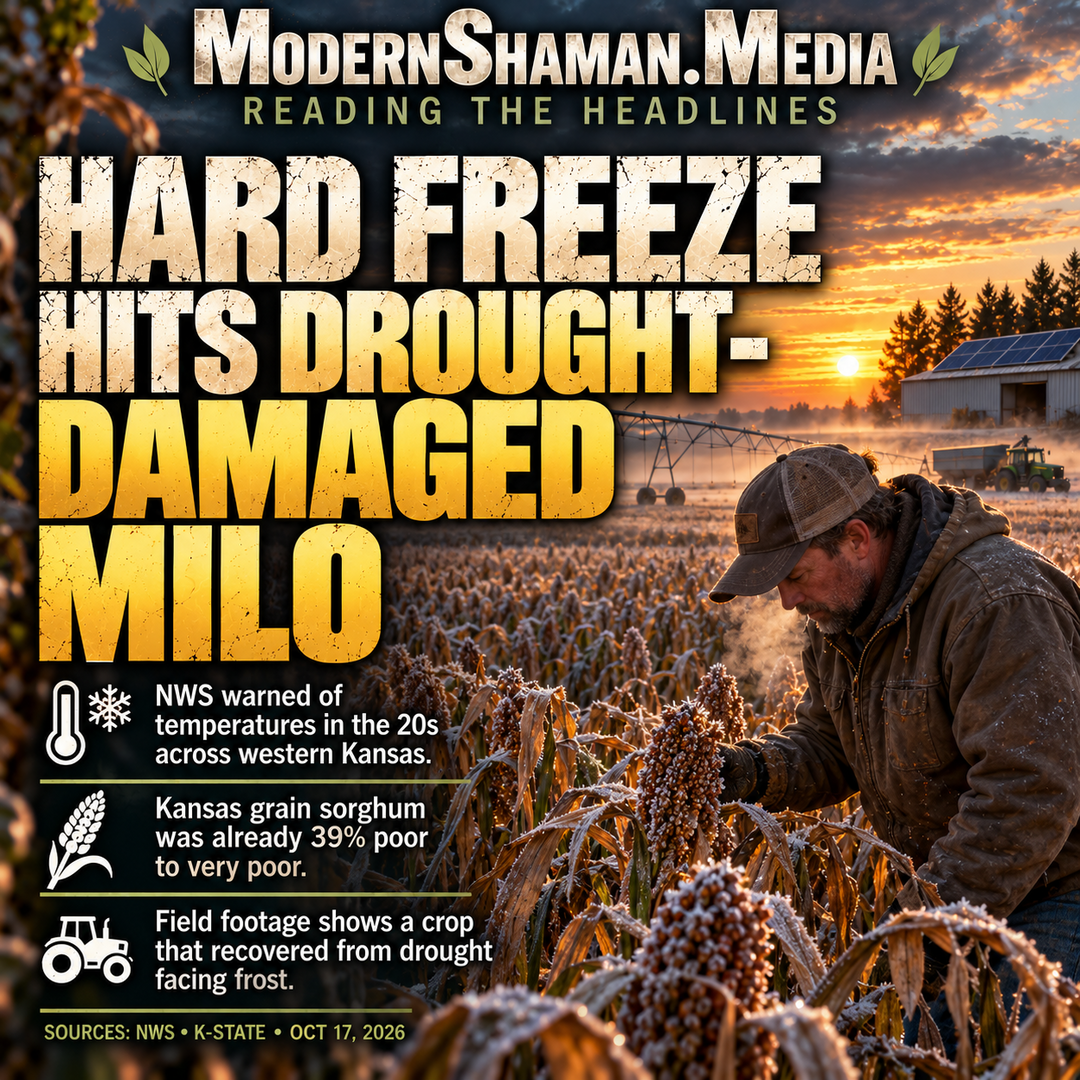
Southwest Kansas grain farmer Clay Scott posted field footage on October 16 showing milo that had recovered from drought damage just before an expected hard freeze. Scott farms near Ulysses, Kansas. The video is direct evidence of one exposed field and the grower's own assessment; it is not proof that every Kansas sorghum field was damaged or that a national grain shortage has begun.
The weather threat was official and immediate. The National Weather Service office in Dodge City kept a freeze warning in effect through 9 a.m. CDT on October 17 for southwest and western Kansas, including Ulysses. The warning called for temperatures in the 20s across western Kansas and said frost and freeze conditions could kill crops and other sensitive vegetation. A final damage assessment was not available when this story was published.
The crop entered the cold snap with little cushion. K-State's October 1 agronomy update, citing Kansas Agricultural Statistics data from September 27, said 39 percent of the state's grain sorghum was rated poor or very poor, 37 percent fair and only 24 percent good or excellent. Harvest was just 12 percent complete. Sorghum, often called milo on the Plains, feeds livestock and also moves into food, ethanol and other markets, so localized losses can press farm margins and regional feed supplies even when they do not create a nationwide shortage.
For households, the practical signal is upstream rather than an instruction to panic-buy. Keep a normal rotating supply of staples your family already eats, watch local feed and meat prices over time, and avoid treating a single dramatic field video as a forecast for the entire grocery aisle. For growers, the next useful information will be county-level crop assessments, insurance documentation and extension guidance after plants thaw enough for injury to be evaluated.
The deeper accountability story is how public policy distributes drought and water risk across the High Plains. Scott has served on a southwest Kansas groundwater-management board, and reporting on the Ogallala Aquifer documents decades of overuse and debate over whether local districts or the state should impose conservation. A natural freeze is not evidence that a religious or globalist network caused the weather. The documented power questions are visible: who controls groundwater withdrawals, whether disaster and crop-insurance programs reward resilience, and whether farmers receive timely, transparent support before one weather shock compounds another.