
 GET THE APP
Humanoid Cleaners Record Your Home
Tau Robotics is testing $30-an-hour humanoid home cleaning in San Francisco. Humans still operate much of the work, while camera footage can feed robot training unless customers request deletion.
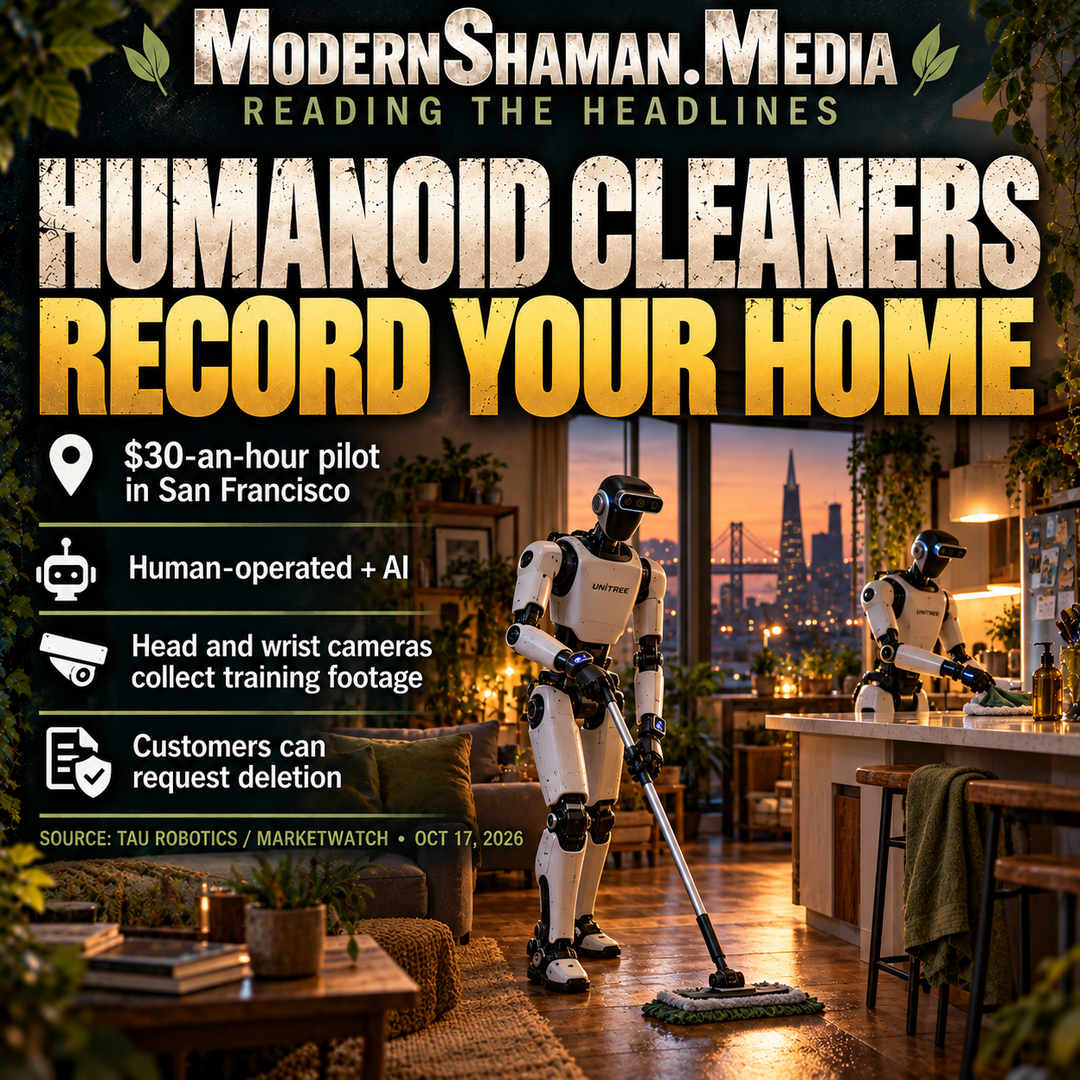
Tau Robotics is sending pairs of humanoid robots into San Francisco homes for a $30-an-hour cleaning pilot. The company's service page says the machines can dust, wipe counters, clean toilets, vacuum and mop. An October 17 MarketWatch test found that the robots could handle several of those chores, but tasks requiring more dexterity—such as loading a dishwasher or folding laundry—were slower and less reliable.
This is not autonomous housekeeping in the ordinary sense. Tau says the robots are operated by a combination of humans and artificial intelligence, with a human supervisor present. MarketWatch reported that remote operators helped perform much of the work while the robots' software handled some motions. That distinction matters because a polished demo can look like general intelligence even when a person remains in the control loop.
The more consequential story is the data exchange inside a private home. Tau's privacy disclosure says head and wrist cameras collect video during service, along with robot telemetry. The company says those records are used for remote operation, safety, troubleshooting and training. Customers can ask Tau to delete raw video and telemetry and remove the material from future training sets; people who do not make that request may be allowing their home footage to help build the next version of the product.
For households considering the service, the practical questions are straightforward: who can see the live feed, how long raw footage is retained, whether bystanders are recorded, what happens if an operator is overseas, and how deletion requests are confirmed. A low hourly price should be weighed against privacy, reliability and the reality that a human operator may still be watching the robot work.
The underlying power issue is not proof of a hidden religious or globalist network controlling a cleaning startup. It is a documented and familiar pattern in modern technology: a service can be both the product and a data-collection system. The unanswered policy questions are who owns recordings made in the home, whether consent is meaningful when training data lowers the service price, and whether workers and customers will share in the value created by that data or merely supply it. Those are questions regulators, insurers and households should settle before domestic robots become ordinary furniture.