
 GET THE APP
Iowa Corn Harvest 13 Points Behind
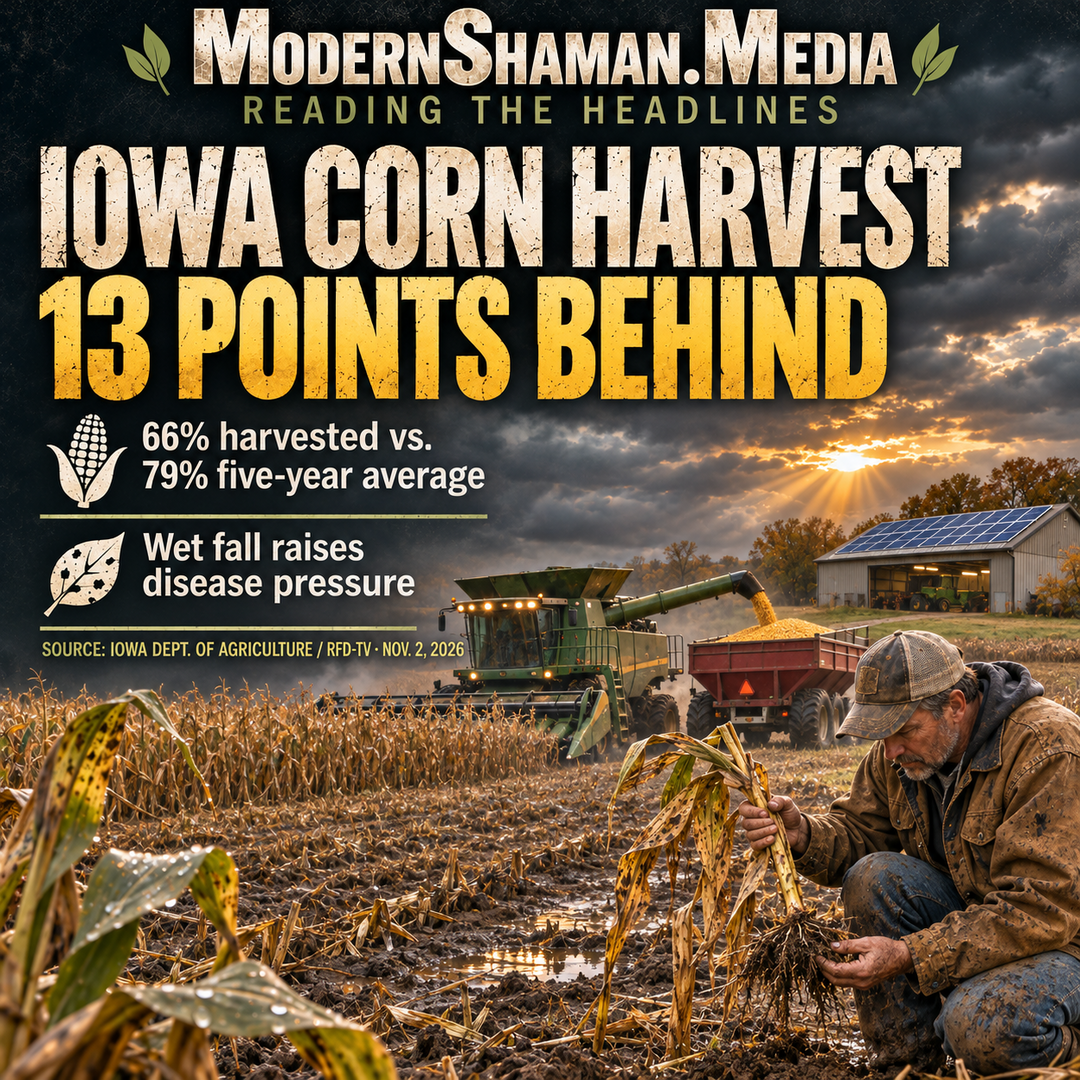
Iowa's corn harvest is moving, but it is still thirteen points behind the normal pace. The Iowa Department of Agriculture's Nov. 2 report says 66% of the state's corn was harvested as of Nov. 1, compared with a five-year average of 79%. Soybeans were 90% harvested, right on their five-year average.
That distinction matters. This is not a claim that Iowa's whole harvest has stopped, and it is not proof of an immediate national shortage. Farmers still had 5.1 days suitable for fieldwork during the week, and state officials said they made strong progress. The verified problem is narrower: rain fell somewhere in Iowa every day of the reporting period, corn remained behind schedule, and some fields carried more disease and quality risk the longer crops stayed wet.
RFD-TV's source report shows Iowa State agronomist Meaghan Anderson describing late crown-rot pressure after the wetter fall. Iowa State Extension had already warned that wet conditions can increase stalk, ear-rot and storage problems, and that suspect grain may need testing, segregation and careful drying. Those are practical farm decisions, not internet theater.
The deeper story is how a local weather delay can travel through a centralized food system. Corn is not only food on a grocery shelf. It moves into livestock feed, ethanol, export channels and hundreds of processed products. When harvest timing, drying capacity, storage quality and transport all tighten at once, farmers absorb the first risk while families encounter it later through feed costs, fuel markets or food prices.
This is where concentrated power deserves scrutiny. The rain is not a conspiracy. The vulnerability is the dependence on a few tightly linked channels for seed, fertilizer, grain handling, processing, finance and distribution. A system can post a large national crop on paper while individual growers still face disease, drying costs and weak bargaining power. Those facts can coexist.
I am watching the institutions that translate field conditions into market power. Who owns the storage? Who sets the grade? Who finances the crop? Who can wait out a wet harvest, and who has to sell into it? Those documented chokepoints tell us more than forcing every storm into a secret plot.
For ordinary households, the useful response is steady: keep a working pantry, rotate what you store, and do not panic-buy from one headline. For growers, the official guidance is equally concrete: prioritize compromised fields, inspect stalk and crown health, test questionable grain, and protect storage quality. Preparedness begins where the facts are, not where fear wants them to be.