
 GET THE APP
Drought Is Killing Grape Vines
Fresh footage from Jalna shows drought-stressed grape vines as Maharashtra restricts water and assesses widespread crop losses. If established vines die, growers may wait at least four years for replacement plants to produce commercially.
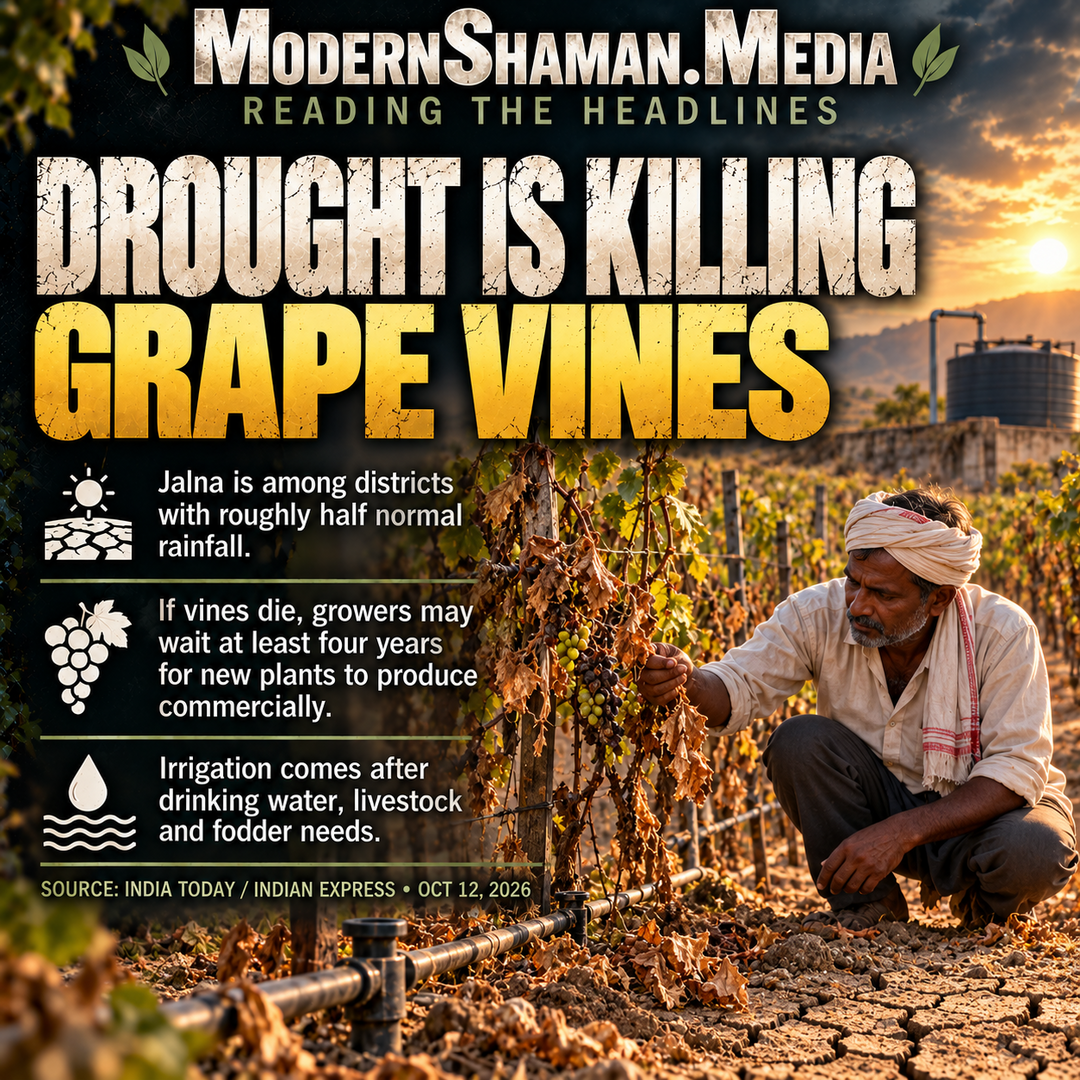
Ara's October 12 source video shows severely dried grape vines in Jalna, Maharashtra. The footage is direct evidence of damaged plants at the location filmed, but it does not by itself establish losses across every vineyard or prove a final statewide production total. Those wider claims require separate reporting and official assessments.
The regional drought is well documented. The Maharashtra government declared drought in 265 of the state's 358 tehsils after an 18 percent statewide rainfall deficit. Indian Express reporting identified Jalna among seven particularly hard-hit districts where rainfall was around half of normal, while Marathwada as a whole was 38 percent below normal.
For grape growers, the danger reaches beyond one harvest. India Today reported on October 12 that vineyard operations cannot continue normally without water and quoted the Maharashtra Grape Growers' Association saying that new plants may take at least four years to produce commercially if established vines die. Losing the crop hurts one season; losing the vine can erase years of work and investment.
Water policy shows why perennial crops are exposed. Maharashtra has ordered a minimum 10 percent water cut beginning October 16 and says reservoirs must first cover drinking water, livestock and fodder. Irrigation priority then goes to rabi foodgrain and fodder crops, with water for perennial crops available only if supplies remain.
For ordinary households, this is not proof that grapes will vanish from every market or that prices must rise by a specific amount. It is a warning about how a water shortage moves through the food system: farmers lose plants, workers lose harvest activity, processors and exporters receive less fruit, and replacement takes years rather than weeks. The state and central damage assessments are still underway, so the final scale of losses remains unsettled.