
 GET THE APP
Kenya's Milk Shelves Run Low Amid Drought
A fresh Kenyan newsroom video shows the dairy shortage still pressing households. The Kenya Dairy Board calls it temporary supply constraints: processor deliveries fell 3.7 percent from June to July, with fresh milk hit harder than long-life varieties.
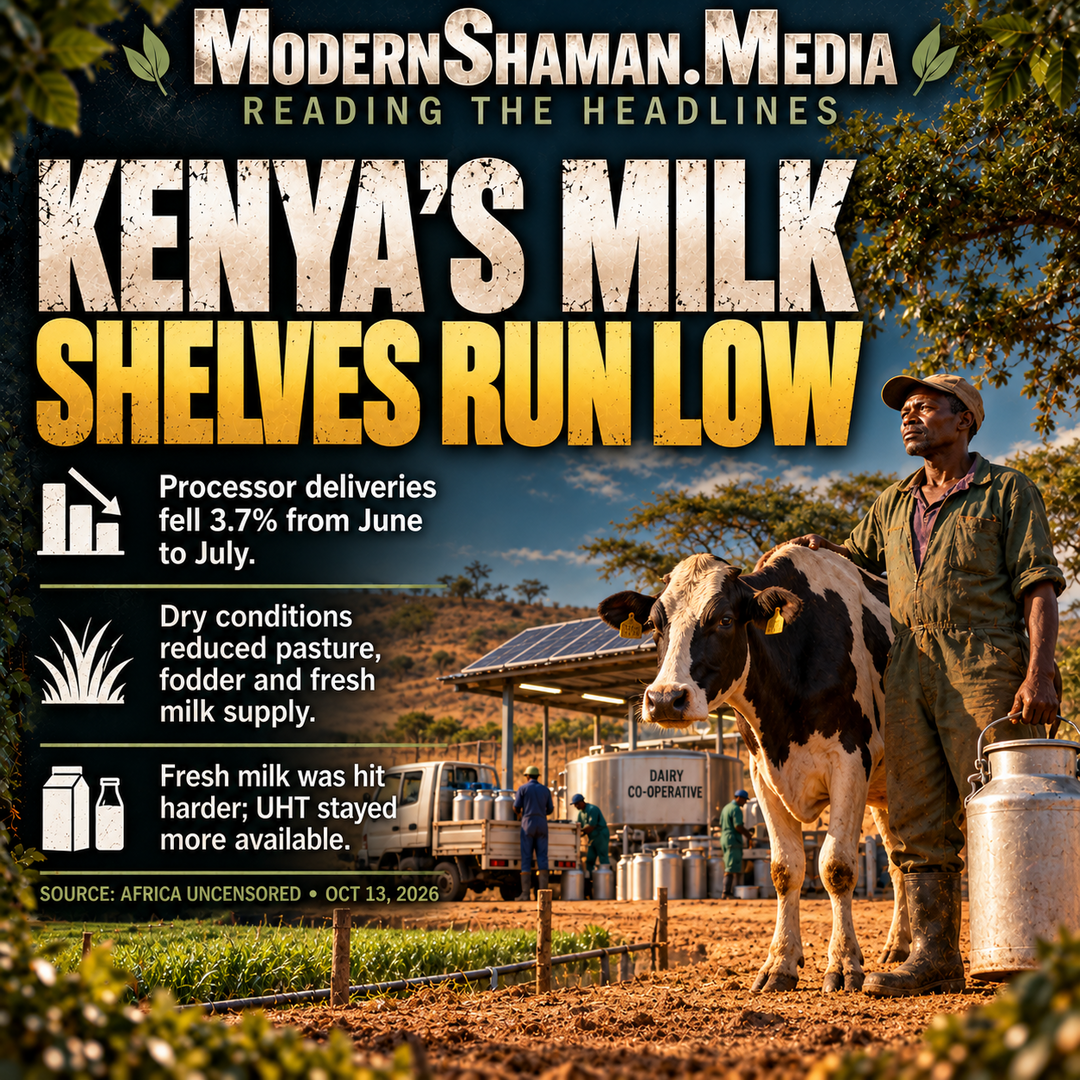
Africa Uncensored's October 13 source video says Kenya's dairy shortage is still showing up as poorly stocked supermarket shelves and higher prices. The video is a current newsroom explainer rather than proof that every store is empty, so the wider claim has to be measured against regulator data and independent reporting.
The Kenya Dairy Board describes the situation as temporary supply constraints, not a complete nationwide disappearance of milk. Formal deliveries to processors fell 3.7 percent, from 84.4 million litres in June to 81.3 million litres in July 2026, and preliminary indications pointed to another decline in August. Market checks found low stock, missing brands or pack sizes and slower replenishment in some outlets.
Weather and feed are the central pressure points. Dry and cold conditions reduced pasture and fodder in major dairy regions, lowering output from farms that depend heavily on local feed. Fresh pasteurised milk has been affected more than longer-life ESL and UHT products because it relies on regular daily collection and has less storage flexibility.
The price effect is real but uneven. Kenya's National Drought Management Authority reported that average milk prices in Kajiado rose from Ksh 70 per litre in July to Ksh 80 in August, while remaining inside the county's normal seasonal range. That is a 14.3 percent monthly increase in one monitored county, not a universal national price tag.
For households, the practical response is calm substitution rather than panic buying: compare fresh and shelf-stable options, keep a modest rotation of UHT or powdered milk if the household already uses it, and plan meals around other protein and calcium sources when a preferred brand is missing. The regulator expected pasture and supply to improve with the October-to-December rains, but recovery depends on how those rains actually develop.