
 GET THE APP
Humanoid Robots Train For Supermarket Night Shifts
A Danish Føtex store is training remotely guided humanoid robots to restock shelves overnight. The robots are still slower than people, with limited independent restocking targeted for early 2027.
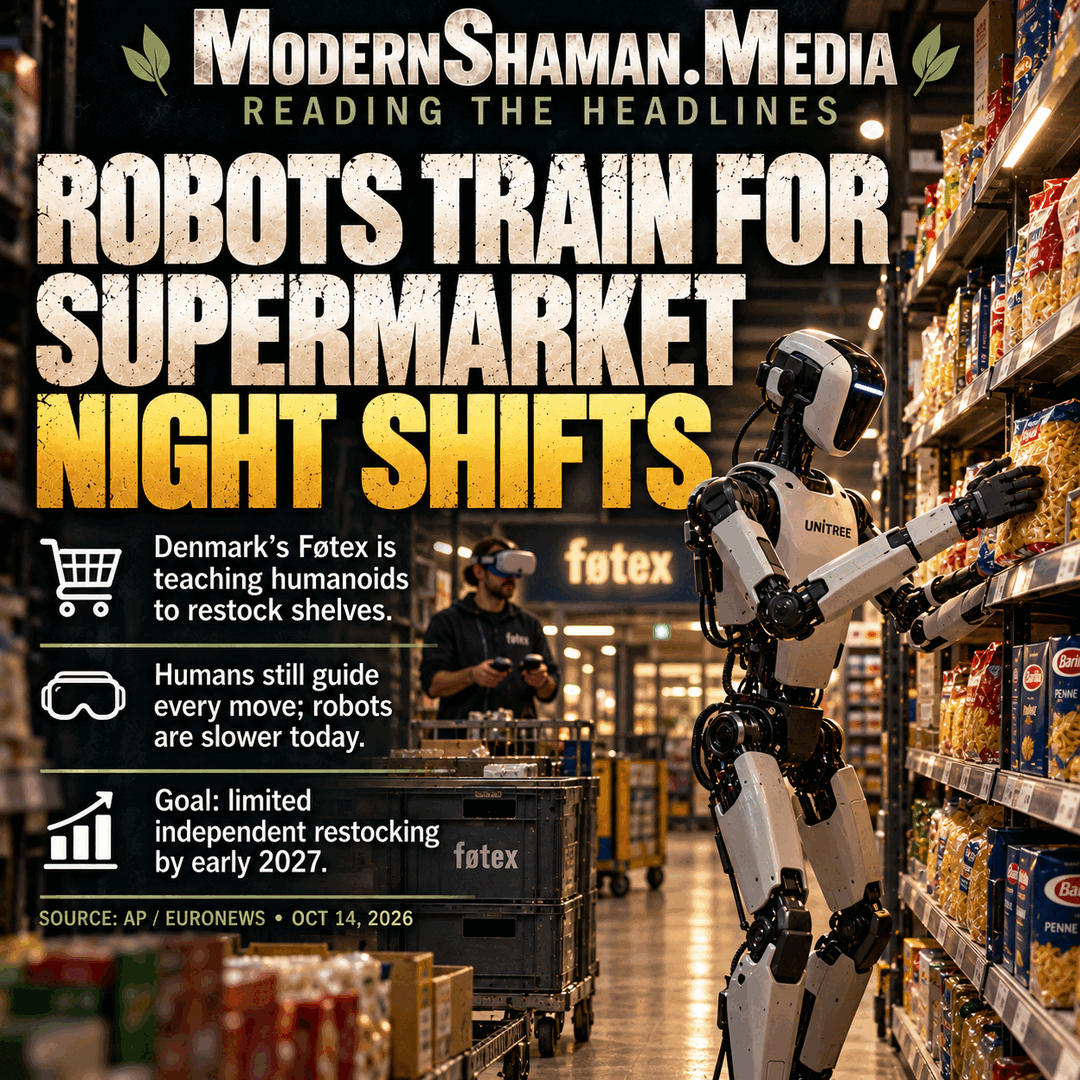
A Føtex supermarket near Copenhagen has become a training floor for humanoid robots. Since June, operators have been guiding Unitree robots through shelf-restocking tasks after closing time while the system records the demonstrations it needs to learn. The October 14 video report shows a real trial in a working grocery store, not a fully autonomous overnight workforce.
Humans still control the machines with virtual-reality glasses and hand controllers, directing each movement as a robot picks up goods and places them on shelves. The robots are slower than experienced store workers today. Hive Robots, the Danish company running the program with Føtex owner Salling Group, says its aim is limited independent restocking by early 2027, with remote human support still available when the robot encounters something it cannot handle.
The attraction for retailers is the amount of routine labor involved. Føtex estimates that shelf restocking accounts for roughly 40 to 50 percent of employee time. Moving some of that work to the quiet overnight hours could make products available earlier in the day and let employees spend more time helping customers, checking inventory or handling exceptions. Those are intended benefits, not results the pilot has already proved at scale.
The practical stakes extend beyond one Danish store. Grocery automation has mostly been visible at checkout, in warehouses and through digital shelf labels. A general-purpose humanoid in the aisle would bring automation into the same physical space where store employees and shoppers work. That raises ordinary questions about safety, reliability, maintenance and job design as much as it raises questions about raw technical capability.
For workers and households, the near-term signal is gradual task change rather than an instant replacement event. The company says widespread use could still be up to five years away, and the current machines require patient human instruction. The useful question is not whether every night shift disappears tomorrow; it is which repetitive tasks become machine-assisted first, what new supervision and repair roles appear, and whether stores use the gains to improve service and resilience or only to cut labor costs.