
 GET THE APP
Salatin Says Farm Policy Keeps Beef Expensive
Joel Salatin argues that subsidies steer too much land toward corn and soy instead of cattle. USDA data support the scale of corn-to-ethanol use, while tight cattle supplies remain a major price pressure.
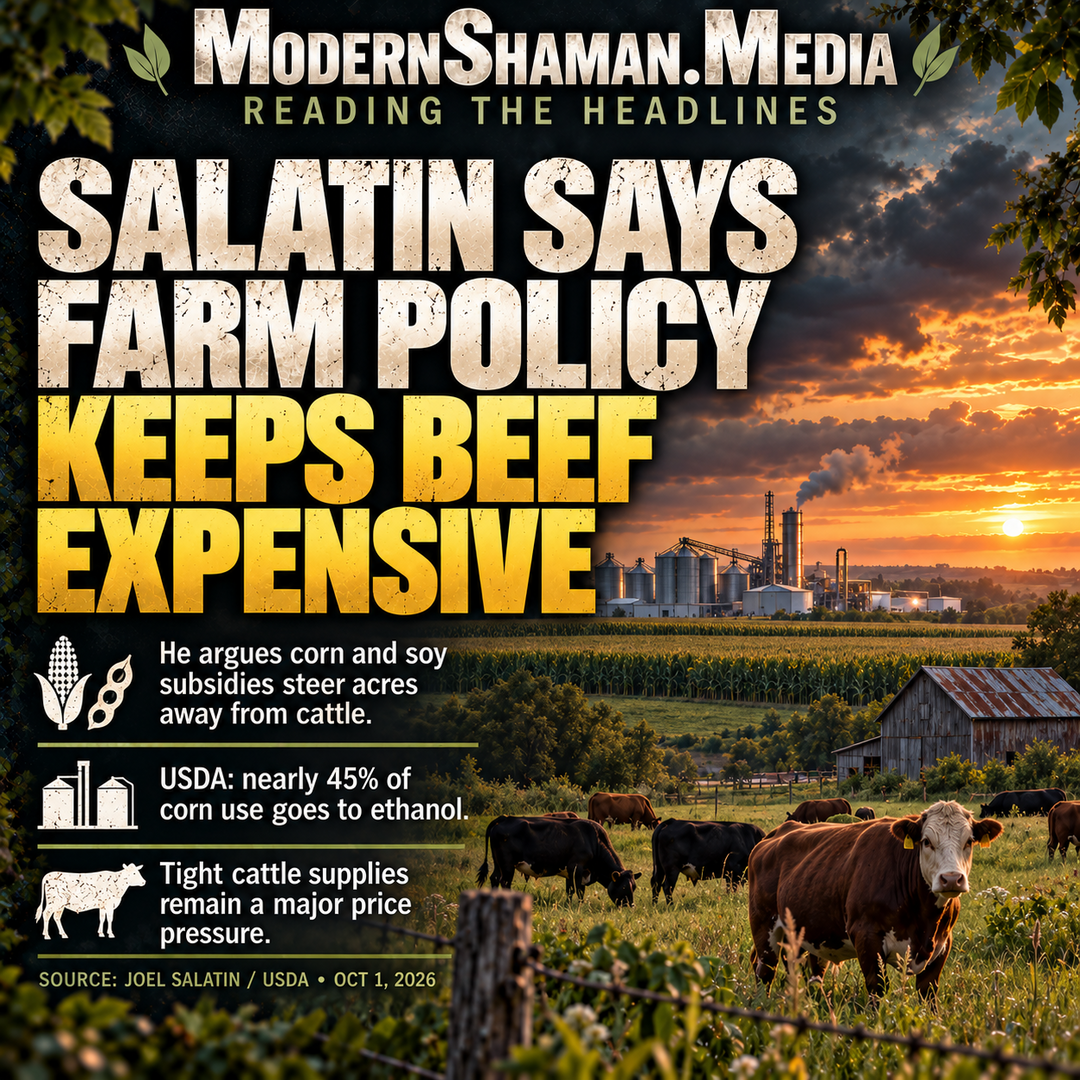
Joel Salatin, co-owner of Polyface Farm, argues that U.S. farm policy helps keep beef expensive by rewarding large corn and soybean systems instead of allowing more acreage to respond to cattle demand. In the source interview, he calls subsidies a major distortion and says farmers should be freer to shift land toward what the market needs.
One part of the land-use claim is well supported by USDA data. The Economic Research Service says ethanol production accounts for nearly 45% of total U.S. corn use. That does not mean the corn disappears completely from the food system, because ethanol production also yields distillers grains used in livestock feed, but fuel demand clearly represents a very large share of corn use.
The soybean shorthand needs more precision. USDA's September outlook projects 1.69 billion bushels of soybean exports against 4.5 billion bushels of production for the 2026/27 marketing year—about 38%, not literally one-half. USDA also expects a record 2.78 billion bushels to be crushed, producing meal and oil used across food, feed and fuel markets.
Salatin's larger causal claim is an argument, not a settled one-cause explanation for beef prices. In the same interview he points to drought, an aging farm population, the long cattle cycle and disruptions to Mexican cattle trade. USDA's current cattle-and-beef outlook says fed-cattle slaughter remains historically low and forecasts lower beef production, evidence that tight cattle supplies are a central near-term pressure.
For ordinary households, the practical point is that beef prices sit at the end of a long chain: land use, cattle numbers, weather, feed, labor, processing and trade. Diversified farms and local processing may add resilience, but no single policy switch can produce more finished cattle overnight. When beef is expensive, cheaper cuts, beans, rice and home cooking remain the most immediate tools for stretching a food budget.