
 GET THE APP
Sulphur Shortage Squeezes Fertilizer
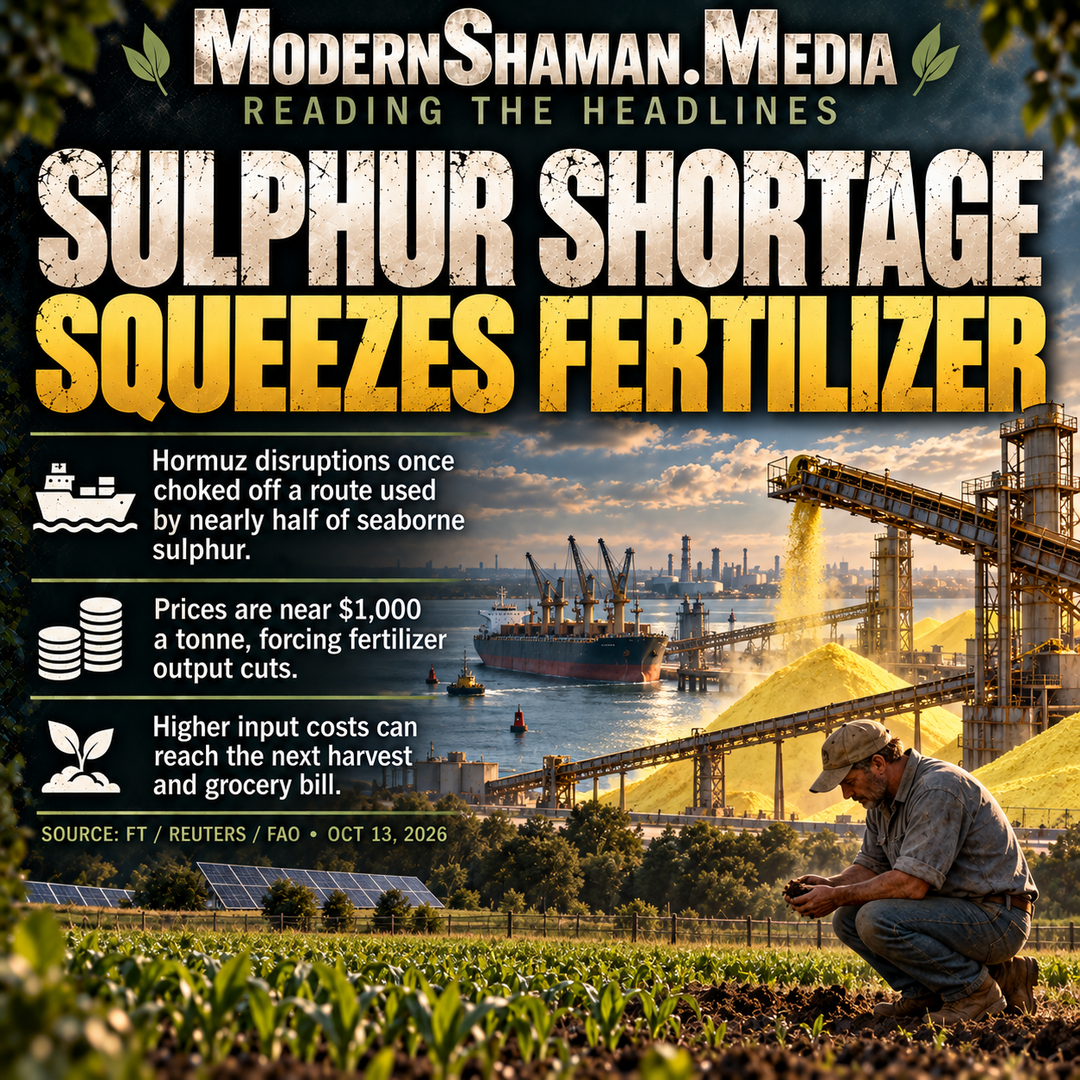
A fresh sulphur shortage linked to Strait of Hormuz disruptions has driven prices toward $1,000 a tonne and is forcing phosphate fertilizer producers to cut output, raising the risk of higher farm and food costs.
Ara's October 13 source pick is a long-form video warning that Strait of Hormuz disruptions can move from shipping lanes into fertilizer and eventually food. The post uses the language of famine, but that outcome is not established as a present fact. The more immediate, verifiable story is a shortage of sulphur, a basic industrial input whose price and availability now pressure phosphate fertilizer production.
Sulphur is mostly recovered as a byproduct of oil and gas processing, then converted into sulphuric acid. Fertilizer makers use that acid to turn phosphate rock into plant-available products such as diammonium phosphate. The Financial Times reported on October 13 that sulphur prices have climbed from roughly $100 to $200 per tonne before the disruption to around $1,000, while metals miners and fertilizer producers compete for limited supply. Some fertilizer plants are cutting output because farmers already face difficulty absorbing higher costs.
The exposure at Hormuz is unusually concentrated. Reuters reported in June that nearly half of seaborne sulphur and about one-third of globally traded urea normally moved through the strait before the war. Shipments resumed after an interim deal, but the recovery was incomplete, fresh sales were limited and facilities in the Gulf still faced damage and shipping constraints. The current shortage shows that a partial reopening does not instantly rebuild inventories, contracts or affordable transport.
The food-price effect is a chain, not an overnight switch. Expensive or scarce sulphur can restrict phosphate fertilizer output; costly fertilizer can lead growers to cut application or accept lower margins; and reduced use can eventually weigh on yields and raise crop costs. FAO's October 2 update already showed its September food-price index 5.8 percent above a year earlier and said uncertainty around Hormuz kept concern over fuel, fertilizer and freight costs elevated. That does not prove a specific grocery item will rise by a specific amount, but it makes the input shock relevant beyond the fertilizer market.
For households, this is a reason to watch staples and waste less—not to panic-buy. Keep a practical rotation of rice, beans, flour, pasta and canned foods that your household already uses, and build reserves gradually when prices are ordinary. Growers should follow local extension guidance and avoid indiscriminate fertilizer cuts that can damage soil balance or yields. The clearest lesson is that food resilience begins upstream: a mineral moving through one narrow waterway can matter months later at planting, harvest and checkout.