
 GET THE APP
Texas Farms Swing From Drought To Flood Risk
After a hot, dry summer, repeated storms are raising flash-flood concerns in parts of Texas. The shift can threaten fields, ranch roads, livestock routes and harvest timing.
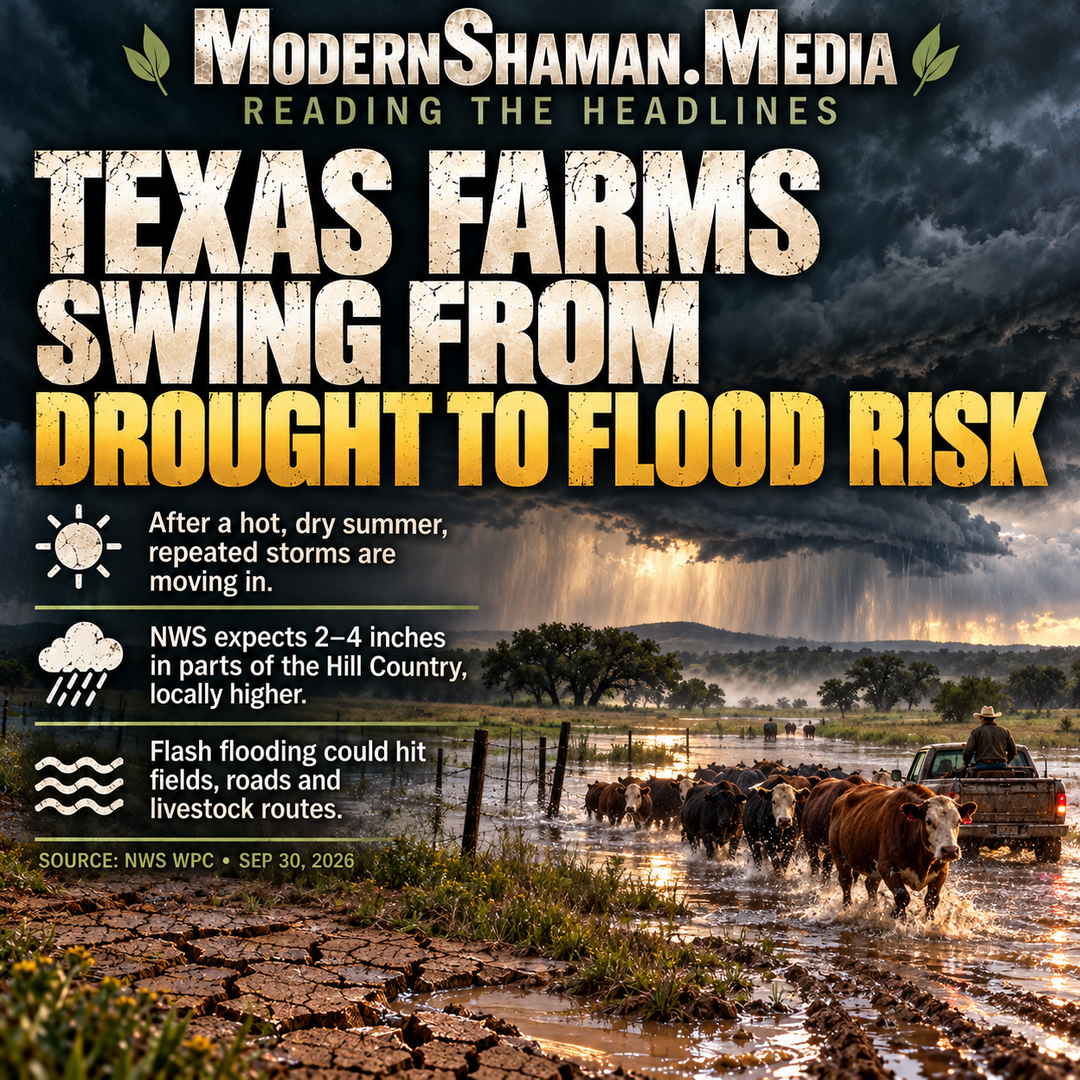
A Texas farm source video captures the operational whiplash: after a summer of damaging heat and drought, the same land is now preparing for repeated heavy rain. The National Weather Service Weather Prediction Center's September 29 outlook placed parts of the southern Plains under a moderate excessive-rainfall risk, with a significant flash-flood threat across portions of the Texas Hill Country.
The forecast called for widespread two-to-four-inch totals in parts of the region, with locally higher amounts possible. Exact rainfall will vary sharply, so the source farmer's concern is best read as preparedness for a serious forecast—not proof that every Texas farm will flood.
Agricultural flood risk is more than standing water in a field. Saturated ground can delay harvest and planting work, wash out low-water crossings, strand equipment, contaminate feed, damage fencing and narrow the routes available for moving cattle. After drought, hard or degraded soil can also struggle to absorb intense rain quickly.
For people in the affected area, the practical move is to follow current local NWS warnings, avoid flooded roads and low-water crossings, move livestock and equipment before access closes, and treat the forecast as changeable. This article records the September 30 setup; live decisions should use the newest official warning.