
 GET THE APP
USDA Corn Estimate Jumps
USDA raised its 2026 corn-yield forecast by 2.7 bushels per acre to 181.2 and put production at 16.03 billion bushels. Separate stock data has renewed questions about how the agency estimates feed demand.
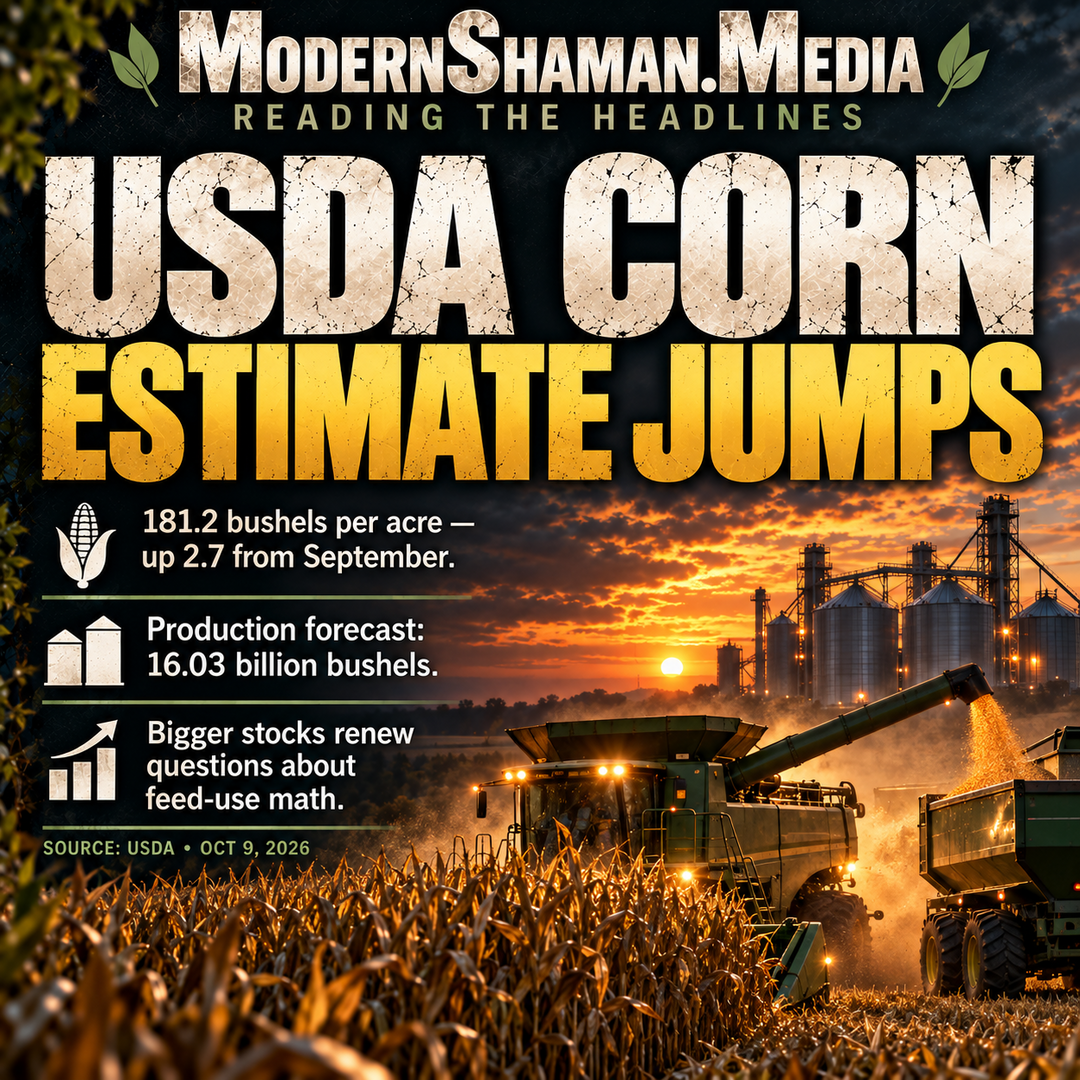
The U.S. Department of Agriculture raised its 2026 corn-yield forecast sharply in the October 9 Crop Production and supply-and-demand reports. The national yield is now forecast at 181.2 bushels per acre, up 2.7 bushels from September, while production is forecast at 16.034 billion bushels. USDA says harvested area is unchanged at about 88.5 million acres. These are forecasts, not final harvest totals, and the agency says its 20-year record implies a 90 percent chance that final production will land between 15.5 billion and 16.6 billion bushels.
The larger crop estimate arrived with a separate revision to the supply side. USDA raised projected beginning stocks for the 2026/27 marketing year by 173 million bushels after the September 30 Grain Stocks report found more than 2 billion bushels of old-crop corn in storage, 35 percent more than a year earlier and above analyst expectations. The October WASDE now projects larger supplies, use, exports and ending stocks.
That stock surprise matters because USDA does not directly measure every bushel eaten by livestock. Feed and residual use is an estimate left after other measured uses are accounted for, and residual can include handling loss and other unexplained disappearance. Reuters reported that several analysts believe USDA had overstated old-crop feed use, especially with the U.S. cattle herd near a 75-year low. USDA says forecasts are routinely updated as surveys and stocks data arrive and that a revision does not by itself prove an unusual forecasting failure.
For households, a bigger corn forecast does not translate directly into an immediate grocery discount. Corn moves through feed, ethanol, export and processing markets before it reaches meat, dairy, eggs, sweeteners or packaged food, and those retail prices also include labor, energy, transport and market power. The practical signal is broader: when the government's supply estimate changes by hundreds of millions of bushels, farmers, elevators, livestock producers and buyers all make decisions against a moving benchmark.
The accountability question is therefore about the quality and transparency of a public data system that helps set expectations across American agriculture. USDA's October briefing lists satellite imagery, crop-insurance acreage, Farm Service Agency records, field observations and farmer surveys among its inputs. Reuters also notes that declining farmer response rates and earlier large revisions have hurt confidence. That documented debate does not establish that a religious or globalist network manipulated the number. It does justify public questions: which inputs drove the 2.7-bushel yield increase, how uncertainty is communicated, how staffing losses affect verification, and whether revisions arrive soon enough for farmers and consumers who bear the consequences.