
 GET THE APP
Wildfire Risk Shuts Off Power
Southern California Edison confirmed wildfire-safety outages on several Ventura circuits while a red-flag warning remains in effect through October 17. An Oxnard resource center is open for charging, Wi-Fi and support.
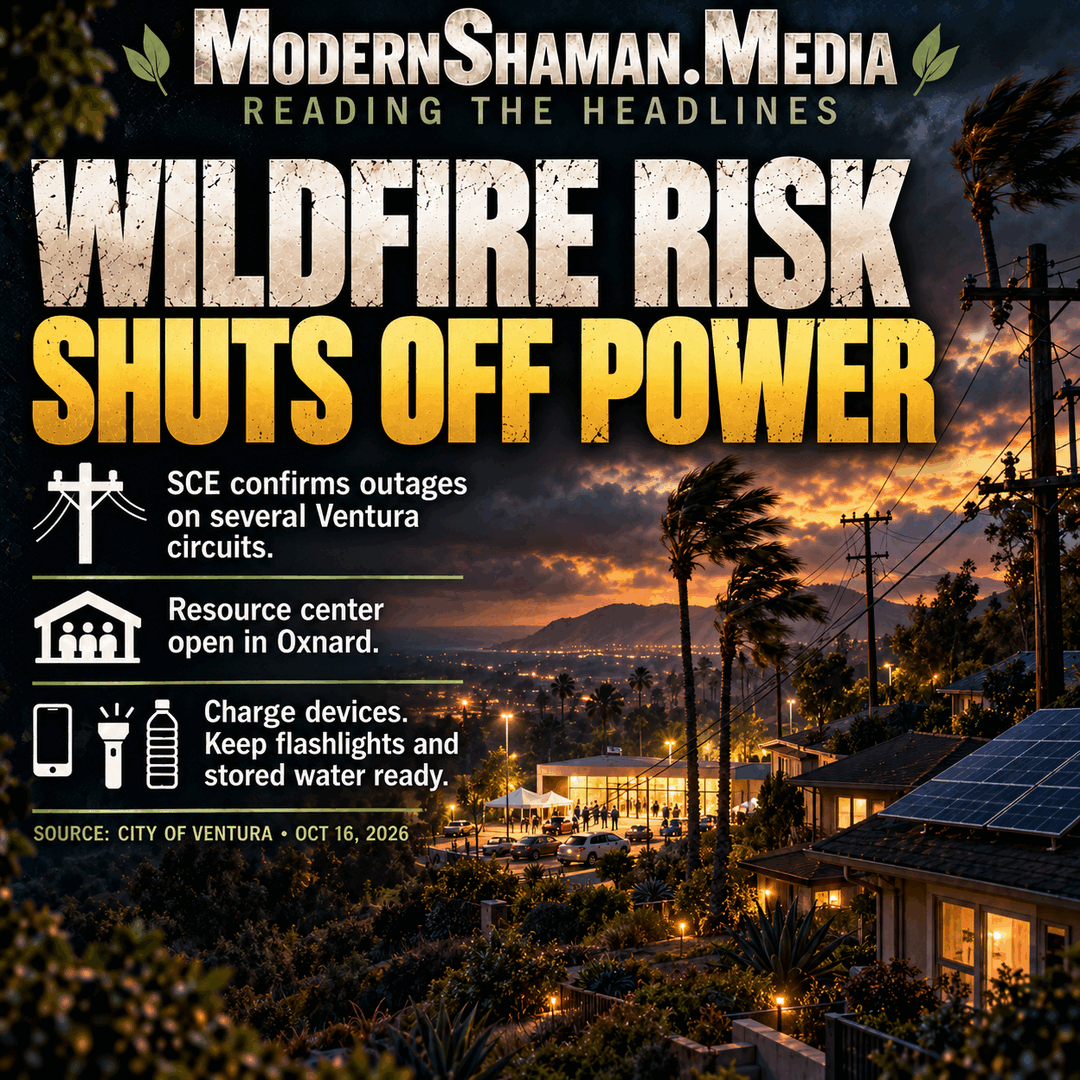
Southern California Edison confirmed that several Ventura-area circuits were de-energized under its Public Safety Power Shutoff program as strong winds and very dry conditions raised wildfire danger. The City of Ventura's October 16 emergency update says the red-flag warning remains in effect through 8 p.m. October 17. That makes this an active preparedness story, not a retrospective outage report.
A PSPS is a deliberate safety measure: a utility turns off electricity in high-risk areas to reduce the chance that energized equipment starts a wildfire. It does not mean every outage was caused by a fire, and it does not guarantee a fire will occur. The tradeoff is immediate and visible—homes, traffic systems, businesses and medical-device users can lose power so the grid is less likely to become an ignition source during dangerous weather.
Ventura County opened a Community Resource Center at the Oxnard Main Library on October 16 from 8 a.m. to 10 p.m. The city says residents can use the center for charging, Wi-Fi, water and other support. Conditions and affected circuits can change, so households should check the utility's current outage map and official local alerts rather than relying on a social-media screenshot alone.
The practical household response is simple: charge phones and backup batteries, use flashlights instead of candles, keep refrigerated food cold by opening doors as little as possible, store some drinking water, and make a power plan for medications and medical equipment. Never run a generator indoors, in a garage or close to windows. Anyone who depends on electrically powered medical equipment should use the utility's medical-baseline and emergency-support resources before a shutoff begins.
The deeper public-interest issue is how utilities, regulators and communities divide the cost of wildfire prevention. A safety shutoff can lower ignition risk while shifting disruption onto residents, workers and small businesses. That tension is documented; it is not proof that a hidden network ordered the outage. The accountable questions are public ones: which circuits were selected, what maintenance and hardening have been completed, how quickly vulnerable residents were notified, and whether community support was available before the lights went out.