
 GET THE APP
Walmart Digital Price Tags Spark Checkout Fears
A viral post claims shoppers are seeing shelf-to-register price jumps. Walmart says its expanding digital labels do not personalize prices or change them by time of day.
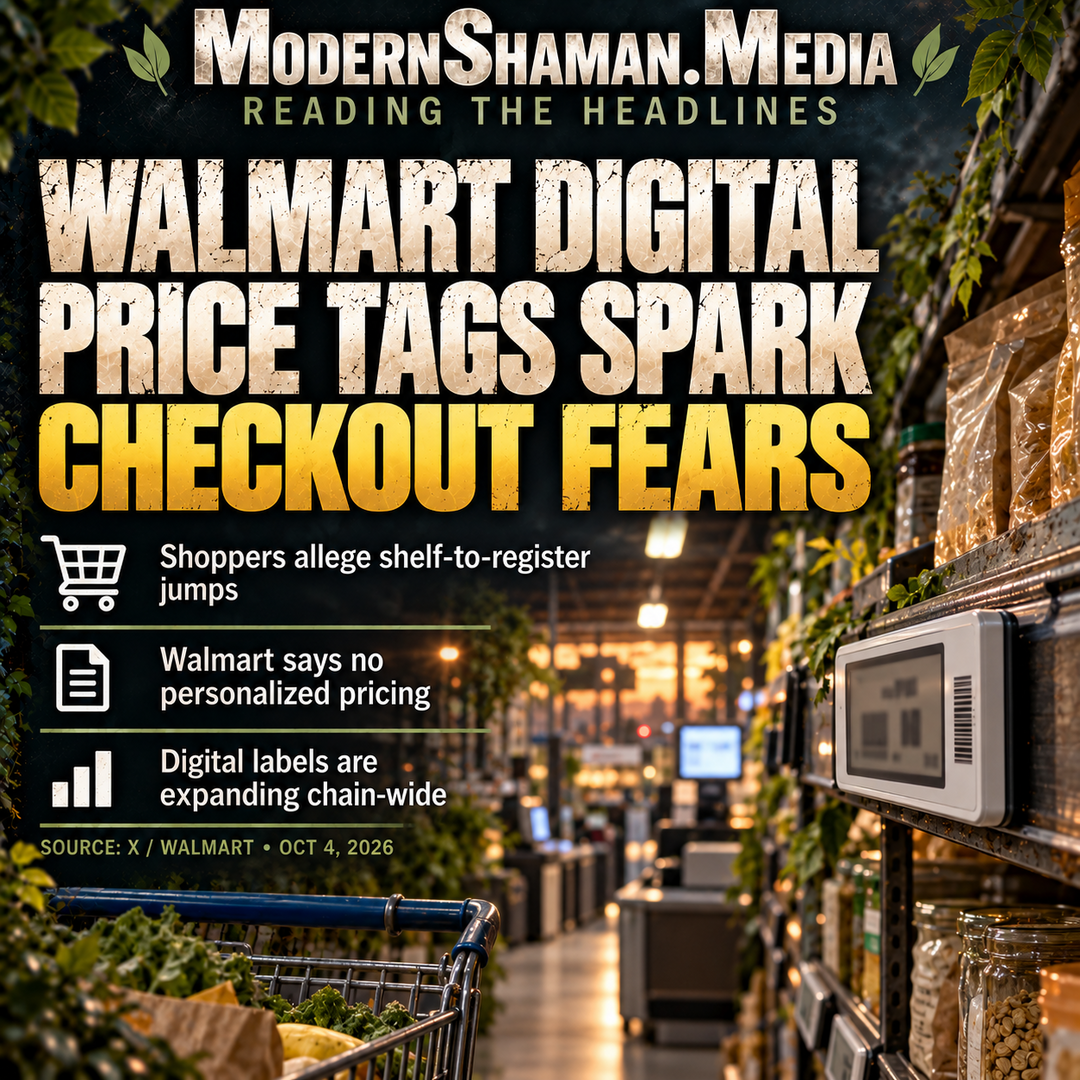
Ara's selected source post says shoppers are claiming Walmart prices can rise between the shelf and the checkout. The post also notes Walmart's denial. That distinction matters: the clip documents a consumer allegation, not verified proof that the company is changing a shopper's price while they walk through the store.
The underlying technology is real and expanding quickly. Walmart said in March that roughly 2,300 U.S. locations were already using digital shelf labels and that it expected the system to be chain-wide within a year. Those electronic displays can replace paper tags and push approved updates through a centralized system in minutes.
Walmart's published policy says the labels do not decide prices, contain no cameras or microphones and show the same price to every customer in a store. CEO John Furner wrote on September 25 that the company does not set different prices based on identity or time of day and will not use shopping history, urgency or AI conversations to personalize what a customer pays.
That assurance does not make every mismatch imaginary. Retailers can still have ordinary pricing errors, misplaced labels, expired markdowns or a lag between systems. The responsible conclusion is narrower than the viral claim: digital tags make fast centralized updates possible, while Walmart says its controls are designed to keep shelf and checkout prices aligned—not to run individualized surge pricing.
For shoppers, the practical habit is simple: read the exact product description on the shelf label, photograph a disputed tag if needed, and check the register total before leaving. The bigger issue is transparency. Faster price technology should make errors easier to fix, and shoppers should be able to see what changed without guessing.